
How Plastic Molding Technologies Support Smart Home Product Design
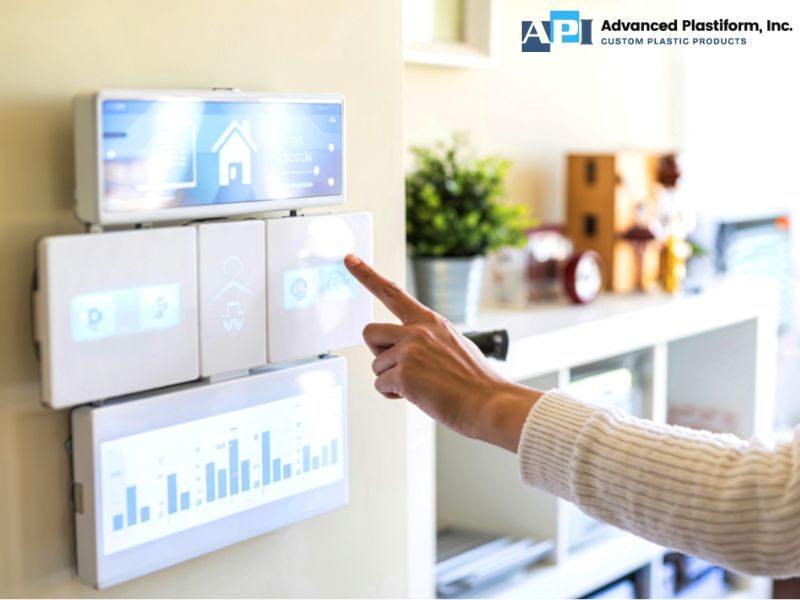
Smart home devices get attention for what they do—lock doors remotely, learn daily routines, and manage temperature without a second thought. But what keeps those devices working year after year is far less visible. It’s the physical build—the materials and how every piece fits together once it’s mounted on a wall or exposed to daily handling—that plastic molding technology comes into play.
From smart thermostats and video doorbells to leak detectors and wall-mounted hubs, many of the components homeowners touch—and never think about—are shaped through precision plastic molding processes. Join our injection molding company as we explore how molding technology supports the smart home devices many homeowners use every day.
Why Plastic Molding Technology Matters in Smart Home Manufacturing
Plastic molding technology allows custom plastics engineers to create parts that hold their shape, protect electronics, and maintain tight tolerances even under the harshest conditions. A smart home device isn’t just a shell around a circuit board. It’s a collection of interdependent parts—snap-fit joints, gasket interfaces, vent paths, mounting structures—that all need to line up precisely.
Injection molding supports that level of precision by offering:
- Repeatability Across High-Volume Production: Identical parts can be produced consistently, reducing fit issues and assembly errors.
- Design Flexibility For Compact Devices: Engineers can mold ribs, clips, channels, and vents directly into the part rather than add extra hardware later.
- Material Options Built For Real Environments: Plastics can be chosen to resist heat, moisture, UV exposure, and everyday chemical contact.
- Cost Control Without Sacrificing Performance: Once tooling is in place, molded components become efficient to produce at scale.
In a market where a loose faceplate or brittle clip can trigger poor reviews, these details carry real weight for manufacturers.
What Homeowners Expect From Smart Home Devices
Homeowners rarely stop and think about how a smart device is manufactured—but they do notice how it looks and feels once it’s in their home. Smart home technology is supposed to blend into the space, not stick out like a bulky gadget that was slapped onto the wall as an afterthought.
Most people expect their devices to feel:
- Sleek and intentional
- Solid when touched
- Quiet once installed
- Flush against walls or surfaces
- Resistant to smudges, scratches, and heat distortion
Those expectations put pressure on manufacturers to use plastic molding technology capable of producing consistent finishes and accurate part geometry. When a surface looks uneven or the casing flexes easily, the device feels unreliable—even if the digital features perform well.
Where Plastic Molding Appears Inside Smart Home Devices
Molded plastics are everywhere inside smart home products. Common components include:
- External Device Housing: Protects electronics from impact, moisture, and UV exposure while maintaining a clean finish.
- Mounting Plates and Wall Anchors: Keep devices stable against drywall, brick, or siding without warping.
- Button Interfaces and Controls: Provides consistent tactile response and long-term durability.
- Battery Doors and Compartments: Maintains hinge strength and secure closures after repeated access.
- Lens Frames and Sensor Covers: Holds alignment for cameras and sensors where even small shifts affect performance.
- Internal Structural Supports: Prevents circuit boards from flexing or loosening.
- Wire Channels and Guides: Safely manage wiring paths within compact enclosures.
Injection Molding for Smart Home Housings
The Injection molding process for smart home housings is straightforward but highly controlled. Plastic resin is heated until molten, injected into a mold cavity under pressure, cooled, and ejected—then the process is repeated thousands of times. The speed and consistency at which plastic parts are built are what make this manufacturing process so valuable.
Injection molding commonly produces:
- Smart speaker enclosures
- Thermostat face frames
- Sensor housings
- Camera base mounts
- Remote control shells
- Wall plate inserts
For homeowners, injection molding is what allows electronics to sit securely without rattling or shifting. For manufacturers, it delivers predictable dimensions that simplify product assembly and reduce costs.
Overmolding for Grip, Sealing, and Everyday Handling
Many smart home devices combine a rigid structure with softer touch points. Overmolding makes that possible by molding a second material—often a rubber-like TPE—over a rigid plastic base.
This approach is common in devices that need:
- Grip Zones: Improves handling during installation and daily use.
- Shock Protection: Adds impact resistance for drops or vibration.
- Weather Sealing: Helps block moisture and dust in outdoor applications.
- Button Membranes: Creates tactile feedback without separate parts.
- Anti-Slip Edges: Keep devices stable once mounted or set down.
Overmolding is frequently used in smart locks, handheld remotes, and garage controllers. It’s a subtle detail, but one that often separates a device that feels “cheap” from one that feels finished.
Insert Molding for Strength and Assembly Efficiency
Insert molding integrates metal components directly into plastic parts during the molding process. Instead of adding threaded inserts or contact points after the fact, manufacturers place them into the mold before plastic is injected.
Common insert-molded features include:
- Threaded Brass Inserts: Allows screws to be tightened repeatedly without stripping plastic.
- Metal Contact Points: Improves electrical reliability in battery compartments.
- Reinforced Mounting Slots: Adds strength where devices attach to walls or brackets.
- Embedded Connectors: Reduce assembly steps and alignment issues.
For manufacturers, insert molding saves time on assembly and reduces variation between parts. For homeowners, it shows up in the small things: secure mounting, smoother installation, and battery doors that still close like they should a year later.
Common Plastics Used in Smart Home Molding
Different components demand different material properties. Plastic molding technology allows manufacturers to match resin choice to performance needs.
Frequently used materials include:
- ABS: Acrylonitrile Butadiene Styrene is impact-resistant and versatile, commonly used for housings and frames.
- Polycarbonate (PC): Polycarbonate handles heat well and offers clarity for lenses or light-adjacent parts.
- PC/ABS Blends: Balances strength and moldability, making it popular in consumer electronics.
- Nylon (PA): Strong and wear-resistant, often used for moving or load-bearing parts.
- TPE: Flexible material used for grips, seals, and soft-touch surfaces.
Material selection influences more than product strength. It affects the color stability and overall assembly reliability, so these components perform long term.
Build Smart Home Components with Our Custom Plastic Engineers
Smart home products succeed or fail in the details—fit, finish, durability, and consistency at scale. If you’re developing a new device or refining an existing design, our custom plastic engineers at Advanced Plastiform Inc. can help you choose the right plastic molding technology, materials, and manufacturing approach to produce components that look clean, assemble correctly, and hold up in real-world home environments.
Reach out today to discuss your project specs and request a quote by calling 919-404-2080 or filling out our contact form. We proudly work with clients throughout the Southeast, including Georgia, Maryland, North Carolina, Pennsylvania, South Carolina, Tennessee, and Virginia.